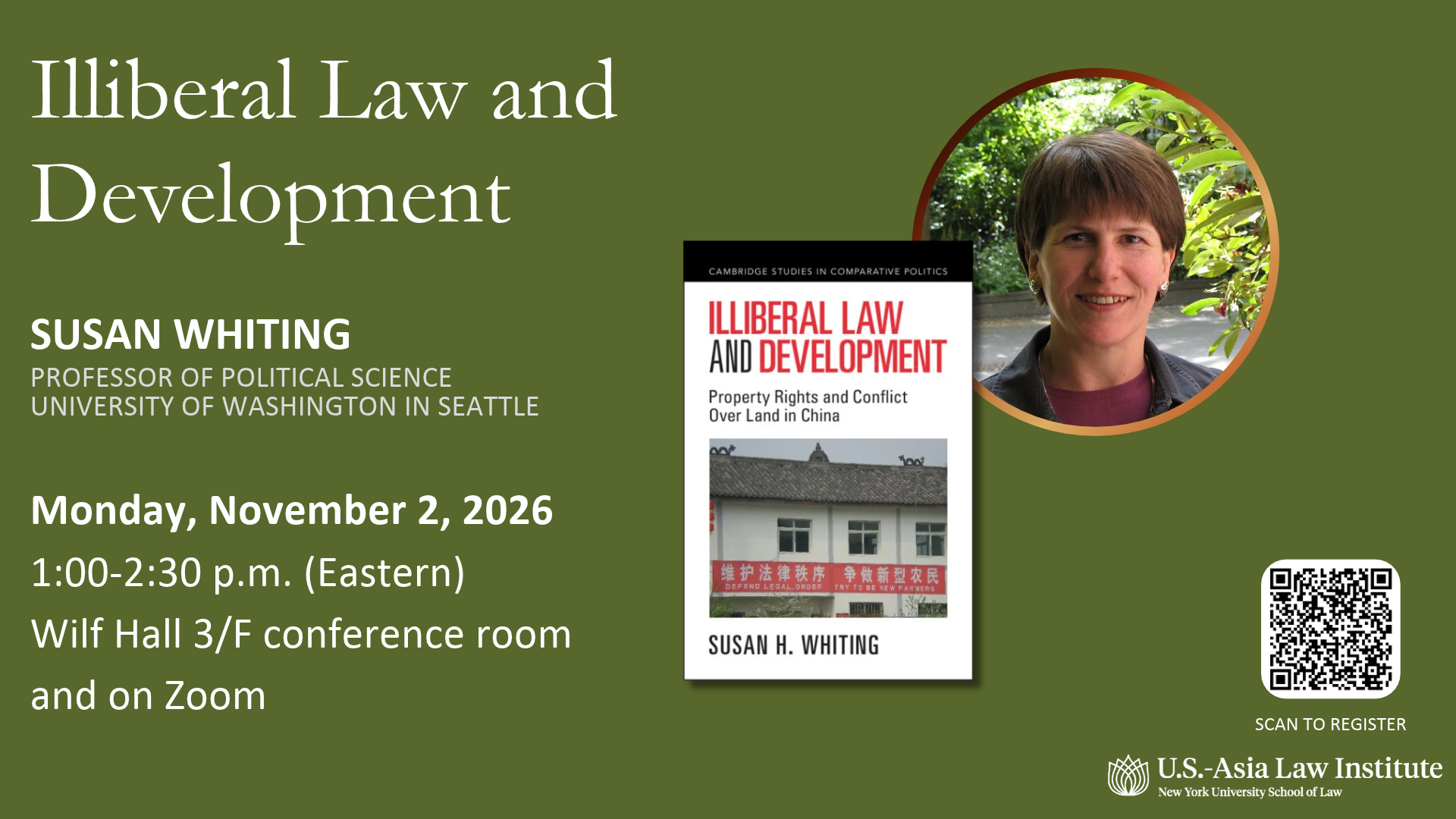
China’s rapid economic development in the absence of strong protections for property rights challenges conventional economic and legal theories. The regime’s ability to maintain not only political control but a significant level of popular support is another Chinese puzzle. Susan Whiting, a longtime scholar of rural China’s political economy, will share insights from her latest book, Illiberal Law and Development: Property Rights and Conflict Over Land in China. Whiting argues that the Chinese state uses law to reassign land rights in order to facilitate development of new sectors and that this analysis sheds new light on the development paths of other cases, including eighteenth-century England and contemporary India. All three states intervened to reassign property rights and spur economic development, but the states differ more significantly in their use of law to manage the resulting conflict. Learn more.
Professor Whiting will join us live via Zoom and will answer questions from both the online audience and those in the room.