Editor’s note:
Japan has long been a leading advocate for nuclear disarmament. However, growing belligerency on the part of its three nuclear neighbors – China, North Korea, and Russia – has put national security at the top of the government agenda, while US behavior has cast doubt on its longstanding commitment to defend Japan. Nobumasa Akiyama, an advisor to the Japanese delegation to the Nuclear Non-Proliferation Review Conference, recently published a study of Japanese public opinion about nuclear deterrence and nuclear disarmament in the face of rising threat perceptions. Dr. Akiyama visited New York in April-May 2026 to observe the Review Conference of the Parties to the Treaty on the Non-Proliferation of Nuclear Weapons at the United Nations. The U.S.-Asia Law Institute took advantage of his presence to invite him to speak at NYU School of Law on May 20, 2026. Dr. Akiyama focused on explaining the sources of Japan’s deep nuclear ambivalence. The excerpts below have been condensed and edited lightly for clarity. See a recording of the full talk here.
Nobumasa Akiyama is a professor of international security at the School of International and Public Policy of Hitotsubashi University’s Graduate School of Law and director of the Center for Disarmament, Science and Technology at Japan Institute of International Affairs. From 2016 to 2018, he was minister-counsellor at the Permanent Mission of Japan to the International Organizations in Vienna. His paper “Ambivalent Japan: Japanese public attitudes toward nuclear weapons,” was published in The Nonproliferation Review (Vol. 32, Nos. 1-3, 2025).
***
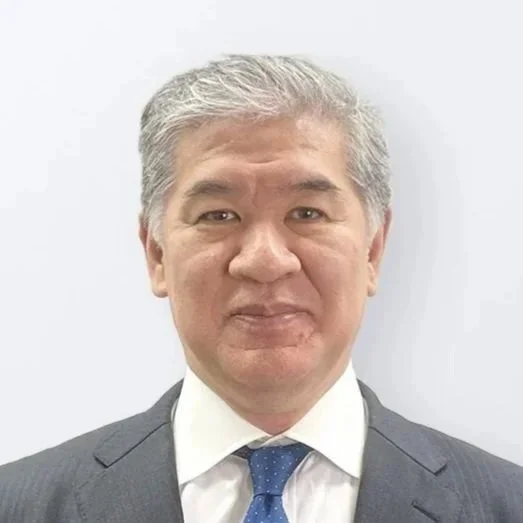
By Nobumasa Akiyama
Japan’s three non-nuclear principles include not to produce, not to possess, and not to allow the introduction of nuclear weapons [into Japan]. Currently, the Japanese government is going through a revision of its strategic documents. One of the topics which the media is floating is whether the government is going to amend the three non-nuclear principles into two and a half or two principles. That is, possibly eliminating the part about not allowing the introduction of nuclear weapons.
The three non-nuclear principles were adopted by the Japanese Diet as a resolution in 1968. The prime minister at that time, Eisaku Satō, also introduced the four pillars of Japan's nuclear policy. The first pillar is the three non-nuclear principles. The second pillar is advocating nuclear disarmament based upon the legacy of Hiroshima and Nagasaki. The third is reliance on US extended nuclear deterrence. Fourth is the use of nuclear energy. These four pillars remain relevant. …
Japan has no intention of having nuclear weapons. Because of the legacy of Hiroshima and Nagasaki, Japan pursues nuclear disarmament. But at the same time, surrounded by nuclear-armed states – we have China, North Korea, and Russia, and unfortunately the relationship with them is not so friendly nowadays – we have no option but to rely on US extended nuclear deterrence, the so-called nuclear umbrella. Some people criticize Japan, saying that nuclear disarmament and reliance on the [US] nuclear umbrella are in contradiction. That is a nuclear dilemma.
Some people criticize Japan, saying that nuclear disarmament and reliance on the [US] nuclear umbrella are in contradiction.
Why are nuclear weapons so important? After the Russian invasion into Ukraine, Japanese political leaders said: Today’s Ukraine could be tomorrow’s East Asia. A giant nuclear neighbor is invading a non-nuclear neighbor. At least psychologically, Japanese people frame the threat environment in East Asia in a similar way. …
Along with this perception of a similar framing, US President Biden said at that time that the priority for the United States is to avoid a third World War. That is a clear signal the United States is not going to fight against Russia and is not going to use nuclear weapons. That raised concern about the credibility of the (American) commitment of extended nuclear deterrence. …
[In Japan,] people started to talk about possibly we should seek nuclear sharing with the United States. Nuclear sharing means the United States and allies manage the operation of nuclear weapons. In Europe, some [US] tactical nuclear bombs are stored in Germany or other allied states and basically managed by the United States, but when war happens, then these weapons [can be] uploaded into, for example, German aircraft, and German pilots are going to drop these bombs. That kind of modality is called nuclear sharing. In Japan, there were rising voices to support nuclear sharing. Some people were even talking about our own nuclear option.
China is developing its nuclear arsenal at the pace of 100 warheads every year. This year, we have an assessment that maybe [China has] 600 to 700 nuclear warheads. That means next year [it could be] 800 and by 2030, it's going to be 1,000. North Korea is also constantly increasing the size of its arsenal, including the update of delivery systems. So the core question is: why does [Japanese public] support for deterrence and disarmament coexist so robustly? What motivates the Japanese people’s attitudes toward nuclear disarmament, nuclear armament, or nuclear sharing?
[In 2023, Professor Akiyama and his co-authors surveyed 1,200 randomly selected participants. They asked participants a series of questions online about their views on nuclear armament, external threats faced by Japan, and what Japan should do in response to such threats. Before answering the questions, the participants were randomly assigned different short articles or “cues” to read, which variously emphasized rising nuclear threats, questioned the credibility of the US-Japan alliance, questioned the credibility of nuclear deterrence, or emphasized normative concerns about nuclear weapons, the so-called “nuclear taboo.” A control group was given an unrelated article to read.]
The interesting part of the survey is the real ambivalence. Findings included:
Even the group that was asked to read a “cue” about possible deterioration of the US-Japan alliance still strongly supported nuclear disarmament;
Nearly 67 percent of respondents considered promoting nuclear disarmament to be a high priority for Japan’s foreign policy;
Nearly 70 percent remained opposed to Japan acquiring nuclear weapons;
Nearly 87 percent viewed the US-Japan alliance as a critical pillar of national security and a similar percentage valued the US nuclear umbrella as important.
Basically, the same person thinks that nuclear disarmament is important but, at the same time, wants to rely on extended nuclear deterrence. …
Basically, the same person thinks that nuclear disarmament is important but, at the same time, wants to rely on extended nuclear deterrence.
I also asked about threat perception. [The response] was a surprise to me. More than 80 percent said that the nuclear capabilities of China, North Korea and Russia are a threat. Of those three [countries], 50 percent of respondents named China as the single biggest threat to Japan. But still only 19 percent thought the United States should retaliate with nuclear weapons if Japan is attacked. … That shows the Japanese public is averse to the use of force.
What should Japan do to promote nuclear disarmament? Some 50.7 percent said that passing on the Hiroshima and Nagasaki experiences to the international community is priority number one. …
Obviously, we have to have a diplomatic effort to reduce the salience of nuclear weapons. For that, Japan needs to have a constructive dialogue with China and the United States. But unfortunately, there is no atmosphere for holding a dialogue among the three. …
Instead of Japan seeking nuclear options or nuclear sharing, probably what Japan can do is to further develop our capability in conventional aspects. At the same time, we are going to do more to develop early warning detection capabilities so that we are able to prevent the escalation of a crisis.
[W]e are going to do more to develop early warning detection capabilities so that we are able to prevent the escalation of a crisis.
Many people think that security and disarmament are in contradiction, but I think disarmament should be an indispensable part of our security. By addressing the threats, eventually disarmament will be achieved. Disarmament and security are inseparable. Japan really needs to establish a logic to connect [the two]. … This is the kind of a message that I would like to send. [Dr. Akiyama said this while showing a slide that read: “Ambivalence provides the bridge between current security needs and future disarmament aspirations.”] That means supporting both disarmament and extended nuclear deterrence is not in contradiction, but Japan has to do more to provide a bridge between current security needs and future disarmament aspirations. Eventually, if we fail to further promote nuclear disarmament, we are going to lose. Everybody's going to lose. Keeping the aspiration is really important at this moment, even in such a serious security environment.
***
Nobumasa Akiyama is a professor of international security at the School of International and Public Policy of Hitotsubashi University’s Graduate School of Law.
Suggested citation:
Nobumasa Akiyama, “Japan’s Nuclear Dilemma,” USALI Talking Points, June 7, 2026, https://usali.org/publications/talking-points-japans-nuclear-dilemma.