Editor’s note:
Rivalry between the United States and China is reshaping the international order, even as the transactional diplomacy of the Trump administration accelerates the erosion of many post-World War II institutions, relationships, and norms. On September 5, 2025, as the US and Japan concluded another round of high-level talks about US-imposed tariffs, the U.S.-Asia Law Institute hosted Ryo Sahashi, a professor of international relations at the University of Tokyo’s Institute for Advanced Studies on Asia, who shared his analysis of how Japan is navigating the shifting global landscape. Professor Sahashi set out Japan’s strategic options in terms of Plan A (maintaining its core alliance with the United States), Plan A+ (maintaining the alliance but developing other relationships as well), Plan B (embarking on a foreign policy independent of the US) and Plan C (linking more closely with China). The event was co-sponsored by the Consulate-General of Japan in New York and the APEC Study Center at Columbia University.
The following excerpts have been edited for clarity and brevity. A full recording of the program can be found here. The discussion was moderated by Bruce Aronson, senior advisor at the Japan Center of the U.S.-Asia Law Institute and an adjunct professor at NYU School of Law.
***
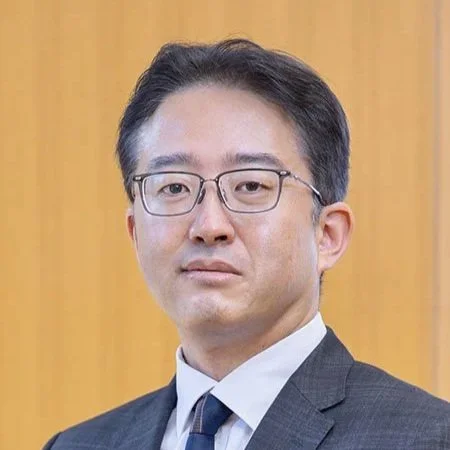
By Ryo Sahashi
Japan today is not a really big power. We are not China, we are not the United States, we are not the EU. So why do you need to think about Japan? There are plenty of reasons.
From the US perspective, East Asia or Asia is a center of prosperity and growth in the future. Many government people say Japan is a cornerstone, the most prosperous ally of the United States. Japan is a really important partner of the United States. Second, Japan has increased its defense budget so much. Japan spends 1.8% of GDP now on defense budget. It was less than 1% for many decades. Japan is rapidly increasing its defense budget, and I’m sure they aim for a 2% target. The Trump administration now seems to ask Japan to spend more than 3% or 3.5% of GDP for its defense budget. From my perspective as a scholar of international relations, this is a very interesting phenomenon, a big change of balance of power. … Third, the international order after the war and after the Cold War has started to change. Many people say middle powers, not the United States, not China, start to have more roles in shaping the international order - the international legal order and international economic order.
Japan is also very interesting from a domestic political perspective. First, Japan started to increase its defense budget. Why and how was it possible? Every country tries to spend money for social security and education. Nobody wants to pay more to the military, especially in a democracy. But Japan did it, and maybe will continue in the future. This is a very interesting question: why and how did Japan succeed in increasing its defense budget?
Second is the rise of populism. The EU countries and the UK have already experienced and suffered from the rise of populism. Finally, Japan has started to suffer from the rise of populism. This is a really new situation, and I don't know where my country is going now with this new wave of politics. But this is also a very important reason to think about Japan.
(Professor Sahashi displayed a photo from the recent 80th anniversary celebration in Beijing of the end of World War II, showing Chinese leader Xi Jinping hosting Russian President Vladimir Putin, North Korea’s Kim Jong-un, and a large group of other world leaders.)
This is what happened this week. I say “welcome to the new world.” The real center figure is Mr. Xi Jinping. On the left is President Putin. You are very surprised why Kim Jong-un is in the first row. North Korea isn't that big a country. But for China as host of this parade and event, Kim Jong-un was very important. The first row was taken by the three leaders, and then leaders from Central Asia and parts of the former Soviet Union. Many leaders went to Beijing to celebrate the 80th anniversary of the war against Japan. This is a new grouping of leaders. … Of course, this is not proof that everybody agreed to transform the international order. Their interests, their visions of the international order are still very different from each other. But this will be remembered in the future as a really important turning point of the world. So many countries gathered in China and decided to join this parade of leaders. We now start to see a big change of patterns of behavior among nations.
We have to admit we are now seeing the real end of the post-Cold War order.
I think we have to admit we are now seeing the real end of the post-Cold War order. What is the definition of post-Cold War order? First, the United States was unipolar or at least a dominating power. Second, in the post-Cold War time, we believed regional integration such as the EU and ASEAN was a very important feature. But now the EU has started disintegrating. Third, China and Russia agreed to underpin the international order. All three elements have surely ended already.
The United States is a very important power in the world. But its willingness to use its power has changed. We cannot say the US is the same as thirty years ago (in its willingness) to shape the international order or to cooperate with other countries for free trade, global governance, regional integration, or peace and security in many conflict areas. The United States has started to give up its role as a dominant power.
Is this the end of the post-war order after 1945? It is more debatable. The US, European powers, and Japan are still united. The US dollar is still the most important currency in international trade. American companies and multinational companies are an important driving force in globalization. These three elements -- military power, financial power, and economic power -- are the three pillars of the post-war order led by the United States. … My answer at this moment is: this is not the end of the post-war order, but we start to see the crux might come very soon for the post-war order underpinned by US military power, nuclear power, the US dollar, and US companies.
The Trump administration's China policy is negotiation-focused.
I don't need to explain that the US and China are not in a good mood. From the first Trump administration, they started to compete with each other. They say we are now in a great power competition.
For the last forty years, the US tried to engage China, keeping some hope of democratization on China's side. But that was just an illusion. They admitted it, then they started to take a different strategy. This is understandable. The US and China had a trade war from the first Trump administration, and even under Biden, the United States tried to keep economic security against China. It tried to regulate investment from China, tried to regulate the export of important goods and technology to China.
How about today? The Trump administration's China policy is negotiation-focused. They keep negotiating. In Geneva, London, and Stockholm, they had three discussions at the ministerial level and maybe they will have a summit meeting. … The interesting thing is the United States starts to relax economic security against China. Now NVIDIA and AMD can sell chips to China. Of course, this is not the fastest grade, but H20 is now possible to be sold to Chinese companies. Everything is very flexible. We still believe the United States are in competition but negotiation between the two countries starts to change the landscape, at least in the eyes of Japanese and maybe other allies. We have to obey economic security but the United States itself starts to relax economic security.
[Japan] has started to enhance its own autonomy, economically and diplomatically.
Let me say something about Japan’s strategic view of the world today. The government people are very busy managing the alliance itself. Yesterday, the [US and Japan] governments agreed to publish a presidential memorandum and issued a joint statement. Japan will have good success in reducing tariffs on automobiles and other things. But Japan also has to spend big money on investment in America. My personal concern is: could we really keep that big investment money productive for Japan's interests? I have big concerns about that as a taxpayer for my own country. But this is what my government has worked on: managing the alliance. At the same time they try to build up the self-defense forces. … This is a new factor in the regional balance of power.
… If we only manage the alliance and build the military, this will not satisfy our strategic aims. We have to take care of the international order. We have to take care of our own trade with China and the world. My country start to have more strategic behavior. Most importantly, [Japan] starts to enhance its own autonomy, economically and diplomatically. This doesn't mean Japan has given up on the United States. The US is still a really important partner for Japan. We don’t have any alternative - no alternative.
If somebody starts to say we have to give up the United States, or this is a Plan B, the independence scenario. Or Plan C, bandwagoning with China. I don't think Plan B or C are taken seriously in Japan today. But just managing the alliance with the United States and building up its own force might not be sufficient for purpose.
So what Japan has been doing is increasing its friends. Just last weekend, a United Kingdom aircraft carrier came to Tokyo Bay. This is the first time HMS Prince of Wales visited. They had a big event with four hundred people gathered on the aircraft carrier. I was there. As you can imagine, the UK and Australia, these countries start to be supplementing forces to Japan. South Korea - maybe? South Korean President Lee Jae Myung came to Tokyo and then came to the United States. This is actually the first time for a Korean president to visit Japan before going to the United States. Many middle powers, not only Japan, start to realize this is a really important moment to team up. But they also know they cannot fill in the space the US leadership start to lose. This is just an ad hoc solution, but better than nothing. This is Japan's Plan A+ strategy. I can say it’s a moderate strategy.
I have deep concern about the domestic politics of my country.
[Japan] has started to be taken by populism. In the last upper house election, the ruling party coalition [of the Liberal Democratic Party and Komeito] didn't get big votes - they lost a lot. One populist party, Sanseito, received 9 million votes. It’s a crazy victory for them. The stability of politics is now in question in Japan. To exercise a Plan A or Plan A+ strategy, we have to expect stability of politics. Even to execute the agreement with the United States, you might want to see the stability of Japanese politics. But I cannot guarantee who will be prime minister next year. Nobody knows what kind of coalition we will have next year. I have deep concern about the domestic politics of my country.
If Japan starts to lose stability, some people may start to say: We cannot believe the US, but also we cannot believe China. We have to go independently. This is the situation I personally really worry about. I always say we have to team up with the United States. We shouldn’t give up on the United States, because if we can manage the alliance with the United States, we don’t need to go independent.
The message we receive from Washington every day starts to lose the basis of credibility on the side of the ally. In many countries, including Japan, sensible people or realistic people try to defend their position that alliance with the US is the indispensable option. But if the US and its allies really lose the basis of credibility, many countries will start to go more independently, and the world will become nearly a jungle of politics. That is my concern.
***
Aronson: Do you see a difference in attitudes in the US and Japan towards engagement with China?
Sahashi: I think we now start to see different attitudes toward China among the US, Asian nations like Japan and Korea, and even European powers. These differences come from different reliance on trade or economic relations with China, and also distance from China. For Japan, South Korea, ASEAN countries, and even Taiwan, China still provides opportunities economically. There's no legitimate reason to give up such a big opportunity in the digital economy or global economy. Same for European countries. They really want to keep economic engagement with China. …
Maybe most American people don't believe perfect decoupling is profitable for the United States. Many people argue partial decoupling should be important for American and international security perspectives. But we always wonder which voice we have to believe from the United States. Some people seriously discuss perfect decoupling from the Chinese economy. They argue: we have to. If we only listen to that message, we cannot find common ground….
Aronson: You mention common ground. Are you optimistic we will reach that?
Sahashi: No. As you said, China is also a market and China is a partner for some scientific cooperation, technological cooperation. We have to see the big picture. If not, we cannot find common ground. … Yes, we have to diversify. Many Japanese companies, Korean companies, and Asian companies do so. They are not stupid. They try to diversify. But if the message is just to disengage or decouple … [with] such a view it is really difficult to manage [US] relationships with partners in Asia and Europe.
On the nature of US-China competition
Aronson: Ultimately, what are we competing about? Are we competing about governance models, authoritarian versus democratic, and which one is more attractive or produces better results?
Sahashi: This Monday, the Chinese government published a new document about its Global Governance Initiative. … The Chinese government has started to provide many new ideas about the international order. But they never said this world should be based on autocracy. What they say is the UN system and international law are important, and no interference in domestic affairs is the most important concept. What they try to compete with the United States or G-7 countries on is how much the rules-based order should be configured. The Chinese vision is this should be a rules-based order, but at level one. But G-7 countries try to go to level ten. This is a very skillful way to describe the vision by China. They never say this world should be based on autocracy or dictatorship, but they try to dilute the meaning of “rules-based order.” This is what we compete on.
Even without a strong initiative by the US government, we really need to protect a rules-based order. You are now in law school; you are fine with the vocabulary “rules-based order.” But in the real world outside law school, if you say “it is very important, rules-based order,” most diplomats just laugh. Many people are starting not to believe in international rules, international laws, and international norms. Because of this, we really have to underpin international legal order. Our task is: how can we do it without a strong initiative from the US government? Maybe Japan, the UK, and other European countries can do it, but it's not sufficient. We have to find more partners, friends, for legalizing the international order. If not, we simply lose this competition.
On the US-Japan trade and investment agreement
Sahashi: I really don't think that was a good deal for Japan. It's a good deal for the United States. Look at the investment commitments between two countries. We still don't know if Japan will have to say yes to US demands about investment. Allies are somehow in an inferior position to non-allies. This is not a healthy situation.
On Japanese populism
Audience: What is Japanese populism? Is it a version of Japan First?
Sahashi: We have a few populist parties now in Japan. One is Sanseito, a new party that won less than twenty seats in the last upper house election and received 9 million votes in the constituency and 7.5 million in the proportional system. The other party is the Nationalistic Democratic Party (Minshuto). We also have a Japan Conservative Party. Let me focus on Sanseito because Sanseito is the party that says “Japan First.”
Sanseito has xenophobia. They always say we have to put Japanese people's interests in front of politics. What they want to say is to kick out foreigners. But an interesting point about Sanseito is they are not so radical in foreign policy. I don't think they really want to cut off the relationship with the United States, and they are not isolationist. They are more focused on domestic policy and the inclusion of foreign immigrants and workers into Japanese society.
Aronson: Up until this year, despite Japan's low economic growth rate for a long period of time, Japan seemed to be doing okay. Housing, healthcare, and education have been readily available to Japanese people despite a very low economic growth rate. This was my theory as to why we didn't see right-wing populism in Japan. But after hoping for inflation for twenty years, Japan finally got some. Economists like it, but no one else does. The price of rice has skyrocketed, the most basic food that people in Japan eat. Cost of living has been a very large factor in the rise of populism, which would also help explain why they're not perhaps as foreign policy-oriented as some people in the US might be.
Sahashi: A very interesting point in the last upper house election: economic issues like inflation were not the main driver for voters to decide which party or candidates to vote for. Left populism exists. We have one party that got more votes from the last upper and lower house elections, but still not a big victory.
Right populism was very strong, and that was because of xenophobia. I'm always hesitant to use “xenophobia” because what they're saying is: this is unfair, don't spend money for foreigners, spend the money for Japanese. Don't give opportunities to foreigners, give opportunity to Japanese. They are not so much against foreigners. They simply want to get opportunities and money. Somehow the left populism message didn't reach these people, and right populism did reach the voters, and they got 9 million votes.
On the Quadrilateral Security Dialogue (Quad) arrangement.
Audience: Is the Quad dead or is it not as relevant anymore?
Sahashi: Among Quad countries, India is not in the same condition as the other three countries. The other three countries are connected by formal alliance treaties. India is not. But the main purpose when Quad was institutionalized was to bring India into a security institution. It was an important component of security architecture in Asia.
Not only in security, even in the technology area, India has big potential. It is very important and legitimate to bring India into the landscape. The Quad still has many reasons to be supported by the United States, Japan, and Australia. The question now is: does the Trump administration want to keep Quad? We have to remember the first Trump administration was the administration that started to institutionalize Quad. US Secretary of State Mike Pompeo tried to institutionalize the Quad foreign ministers' meetings, and Biden kept that strategy. At this moment, we shouldn't be optimistic about US-India relations, but the Quad still has big potential. I don't think it's a good idea to frame the Quad just as an anti-China coalition. This is more than a coalition against China. India is very important in technology and the economy.
On voices advocating closer ties with China
Audience: Are there voices in Japan advocating that Japan should be closer to China and move further from the US?
Sahashi: I really don't think it will happen, to move toward Beijing and displace the presence of the United States. Among Japanese people, China doesn't have such good credibility. The more likely scenario is: if Japan loses confidence in the United States, maybe they will go more independent, more autonomous, or try to encourage the US to be more reliable. Only two options. Many Japanese companies and strategists don't deny the value of keeping good relationships with China, but that doesn't mean China could displace the United States in Japan's strategy.
***
Ryo Sahashi is a professor of international relations at the University of Tokyo's Institute for Advanced Studies on Asia. He also sits on government panels including the Council on the Actual State of Land Use and Advisory Panel on Science & Technology Diplomacy.